
Acupuncture
Facial Acupuncture + LED
Fine facial needles are gently inserted into targeted areas of the face to stimulate local circulation and provide gentle neuromuscular stimulation. Facial acupuncture helps release facial tension, particularly around the jaw, temples, forehead and other areas where tension commonly accumulates. This makes it especially beneficial for TMJ-related jaw tension, headaches and overall facial tension.
By increasing local circulation and stimulating the tissues, facial acupuncture supports skin health and improves the appearance of skin tone, texture and elasticity. It is beneficial for concerns including acne, inflammation, congestion, uneven skin tone and the appearance of acne scarring.
Body acupuncture points are also incorporated to support the body from within, helping address underlying imbalances and complement the treatment for a more holistic approach to your overall health and skin.
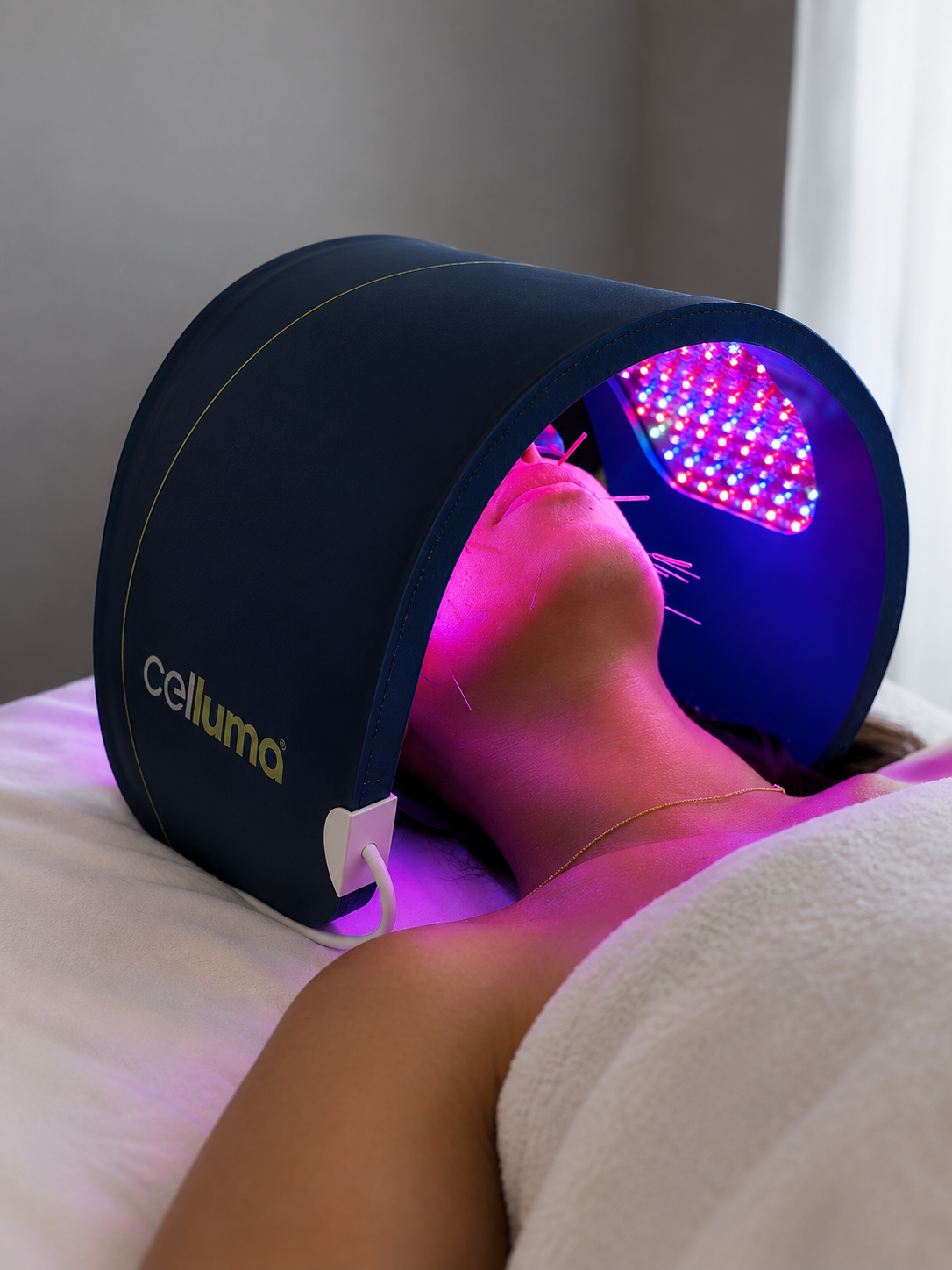
The needles are then left in place for approximately 25 minutes while you relax with Celluma LED light therapy. Red and near-infrared light supports collagen production, reduces redness and inflammation, and promotes skin repair, while blue light targets acne-causing bacteria and helps reduce breakouts.
To finish, gentle facial cupping is added to encourage circulation, support lymphatic drainage, reduce facial tension and help decrease puffiness. Unlike traditional body cupping, facial cupping uses gentle suction and does not leave the bruising or circular marks.
For best results, a series of treatments is recommended, typically once weekly for 5–6 weeks, followed by maintenance treatments as needed.

Initial and Subsequent Acupuncture Treatment
Fine acupuncture needles are placed in the area of concern, as well as in other areas of the body to support your health and address the condition as a whole. In Traditional Chinese Medicine, acupuncture works by promoting the movement of Qi (energy) and blood throughout the body, helping to address stagnation that can contribute to pain, tension and discomfort.
For pain and injury-related conditions, IMS/dry needling (motor point acupuncture) can also be incorporated to target specific muscles, helping to release muscle tension, improve mobility and support recovery.
Needles are typically left in place for 20–25 minutes, with electro-acupuncture and cupping incorporated when appropriate for the condition being treated.
Acupuncture can be used to support a wide range of concerns, including:
Pain & Injuries
Neck pain • Shoulder pain • Low back pain • Hip pain • Knee pain • Sciatica • Plantar fasciitis • Tennis elbow • Golfer’s elbow • Wrist pain • Ankle pain • Muscle strains • Sports injuries • Joint pain • Arthritis • Chronic pain • Acute injuries
Head, Jaw & Facial Tension
TMJ tension • Jaw pain • Teeth grinding • Headaches • Migraines • Tension headaches • Neck tension • Facial tension • Sinus pressure
Women’s Health
Menstrual cramps • PMS • Irregular cycles • Period-related pain • Ovulation pain • Endometriosis-related pain • PCOS support • Fertility support • Pregnancy-related discomfort • Nausea • Postpartum recovery • Perimenopause and menopause symptoms
Stress, Sleep & Nervous System
Stress • Anxiety • Difficulty sleeping • Fatigue • Burnout • Nervous system regulation
Digestive Health
Bloating • Constipation • Diarrhea • Nausea • Digestive discomfort • IBS symptoms • Appetite and digestion support
A personalized treatment plan will be created during your initial appointment based on your specific concerns and goals. While treatment frequency varies depending on the condition, a series of three treatments, typically once per week, is a common starting point.

Prenatal /Induction Acupuncture
Acupuncture during pregnancy is tailored to your stage of pregnancy and individual needs to help manage common pregnancy-related symptoms, reduce pain and muscular tension, support circulation and promote relaxation throughout your pregnancy.
Treatment can be helpful for concerns such as nausea, headaches, back and hip pain, pelvic discomfort, swelling, fatigue, stress and sleep difficulties. Gentle cupping can also be incorporated when appropriate to promote circulation and relieve muscular tension.
As you approach the final weeks of pregnancy, induction acupuncture can be introduced around 37–40 weeks with approval from your doctor or primary care provider. Specific TCM points with a strong downward action are combined with points around the sacrum to stimulate the nerves associated with the uterus and pelvis. Electro-acupuncture is incorporated during induction treatments to provide additional stimulation. Treatments can be performed 1–2 times per week to help prepare the body for birth, support cervical ripening and encourage labour when the timing is appropriate.

Frequently asked questions
-
Long story short, acupuncture helps to promote blood flow and ‘Qi’ (energy) to the areas of concern which then stimulates healing. It also stimulates your nervous system putting your body into a state of ‘rest and digest’, allowing for rejuvenation.
-
Yes! If appropriate, cupping is usually added at the end of your treatment to help release tension, and create space to promote fresh blood flow to muscles.
-
Yes and no. Essentially, you do want to feel something during your acupuncture treatment whether it’s achiness, heaviness, pressure, tingling or warmth. These are all positive sensations as your body is aware that it is being stimulated. However, as we insert the needle, you may feel a brief moment of discomfort, such as sharpness, achiness, or a burning sensation. It resolves quickly and the needle settles making the treatment surprisingly relaxing.
-
It is typical to feel relaxed and very tired after your acupuncture treatment. Acupuncture lowers blood pressure and puts your body in a state of ‘rest and digest’. You may get a deep sleep the night of your treatment because of this, which is a great side-effect of acupuncture! It is also typical to feel soreness post-treatment when working with tension and injuries as we stimulate the muscles to release, and break down tension with cupping. After 24-48 hours, tenderness will resolve.
-
Absolutely not. Acupuncture needles are only used once, and are disposed of in a sharps container after removed.
-
A treatment plan will be discussed during your initial appointment as everyone is different. But typically, a series of 3 appointments once per week is recommended for optimal results. Follow-up appointments (or what I like to call “tune-ups”), are then recommended as needed every month or so to assure continually of care.
-
Electro-acupuncture involves attaching electrodes to some of the inserted acupuncture needles. A controlled, low-frequency electric current is delivered to the needles which helps to further invigorate the area with blood and relax targeted muscles. Electro-acupuncture is used for a variety of health concerns, including pain management, musculoskeletal issues, and neurological disorders. It feels like a tingling or vibration in the muscle and doesn’t hurt as it can be adjusted to the patient’s comfort level. It is used for acute or chronic injuries that may require extra stimulation. Electro-acupuncture is also used for induction acupuncture!